How Do Motorcycle Accidents Occur in Provo, Utah?
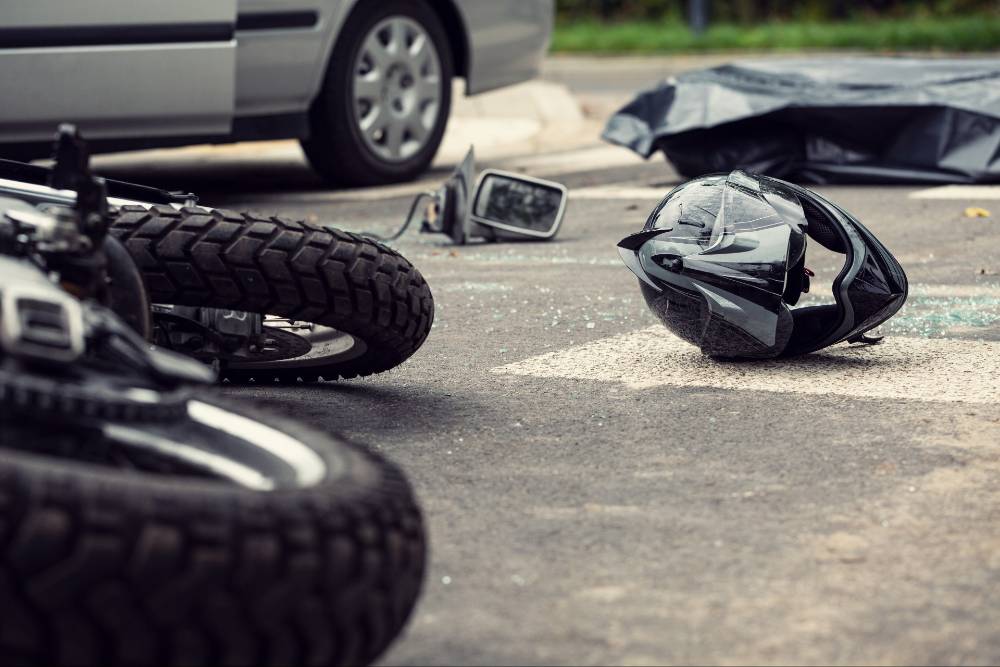
Motorcycle accidents in Provo often happen on roads where traffic flow, visibility, and driver awareness all play a role. Whether a crash occurs on a busy commuter route or a quieter neighborhood street, riders face the same reality: less protection and less margin for error.
Understanding how motorcycle accidents happen can help clarify what went wrong and who may be responsible.
Some of the most common causes include:
- Distracted driving. Drivers who look away from the road, even briefly, may fail to notice a nearby motorcycle. Because motorcycles are smaller, they are easier to overlook when a driver is dividing their attention.
- Failure to yield. Many crashes occur when a driver enters traffic or makes a turn without yielding to a motorcyclist. These situations often arise at intersections or when merging into active traffic.
- Unsafe lane changes. On multi-lane roads like University Parkway or Cougar Boulevard, drivers may change lanes without properly checking mirrors or blind spots. This can place a motorcycle directly in a vehicle’s path with little time to react.
- Speeding and aggressive driving. Higher speeds reduce reaction time and increase the force of impact, which can lead to more severe injuries for motorcyclists.
- Impaired driving. Alcohol or drug use can affect a driver’s judgment, coordination, and ability to recognize motorcycles sharing the road.
- Hazardous road conditions. Loose gravel, uneven pavement, debris, or poorly maintained surfaces can cause a rider to lose control, even when traveling at normal speeds.
Identifying how a motorcycle accident occurred is a critical step in any claim. We review the available evidence to determine what happened and who may be legally responsible for the injuries that follow.
How Do Motorcycle Laws in Utah Affect Your Case?
Utah law plays a direct role in what happens after a motorcycle accident. Certain rules apply specifically to motorcyclists, and these laws can influence how fault is determined and whether you can recover compensation.
Lane Use and Driver Responsibilities
Motorcyclists are entitled to the full use of a lane under Utah law. Other drivers are not allowed to share a lane in a way that limits a rider’s space or forces them out of position.
This provision becomes important in many accidents. If a driver drifts into a motorcycle’s lane, crowds the rider, or fails to respect that space, it can be argued that the driver acted unreasonably and contributed to the crash.
Helmet Requirements
Utah requires riders under 21 to wear approved protective headgear when operating or riding a motorcycle on the highway.
While this law is not relevant to determining liability, it may come into play when evaluating injuries. For example, an insurance company may argue that certain injuries would not have occurred with a helmet. That does not prevent you from bringing a claim, but it may become part of the discussion.
Fallo comparativo
Utah follows a modified comparative negligence system, meaning you can still recover compensation if you were partly at fault, as long as your share of responsibility is less than 50%. However, your compensation is reduced by the percentage of fault you bear. Additionally, if you are 50% or more responsible, you generally cannot recover damages.
Because fault can be disputed, reviewing the facts carefully is an important part of building a claim.
Time Limits
Utah law sets a deadline for filing a personal injury claim. In most motorcycle accident cases, you generally have four years from the date of the accident to file a lawsuit.
If you miss this deadline, you will generally not be able to recover compensation, no matter how strong your evidence may be.
How Do I Prove My Motorcycle Accident Claim?
To pursue compensation after a motorcycle accident, you must show that another party’s actions caused your injuries. A successful claim must demonstrate the following elements:
- The other party owed a duty of care,
- That duty was breached,
- The breach caused the accident, and
- You suffered injuries.
Evidence like police reports, witness statements, and medical documentation helps support each part of the claim and shows how the accident affected your life. For guidance, review the steps to follow after a motorcycle accident.
 (801) 806-0135









 LLAMAR A
  EMAIL
EMAIL  Pregunte a AI
  PREGUNTAS