What Are Common Types of Slip and Fall Accidents?
Some of the most common slip and fall hazards include:
- Wet or slippery floors caused by spills, cleaning, or leaks;
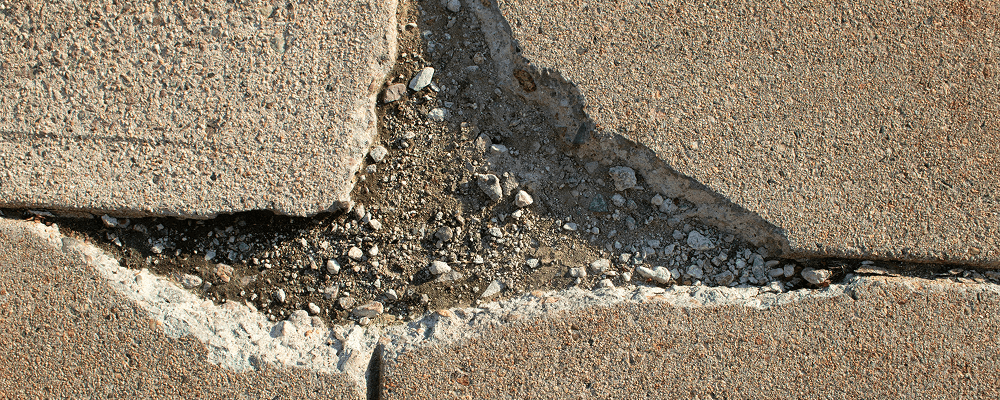
- Uneven sidewalks or walkways that create tripping hazards;
- Loose floor mats or rugs that shift underfoot;
- Broken stairs or missing handrails;
- Poor lighting that prevents people from seeing hazards;
- Cluttered walkways or debris in high-traffic areas; and
- Damaged flooring, like cracked tiles or warped boards.
These accidents often occur in places where people expect to be safe, including grocery stores, restaurants, apartment complexes, hotels, parking garages, and public sidewalks.
Three Legal Issues That Make or Break Slip and Fall Claims Across the County
The Six-Month Government Entity Deadline — And Why It Differs By Community
California Government Code § 911.2 gives you six months from the date of your fall to file a mandatory government claim — not a lawsuit, but a pre-lawsuit administrative notice — before you can pursue legal action against any government entity. What many Stanislaus County residents don’t know is that which government entity you file against depends entirely on where the fall happened.
A fall on a Modesto city sidewalk → claim with the City of Modesto. A fall on a Ceres city sidewalk → claim with the City of Ceres. A fall in Salida → claim with Stanislaus County. A fall in a Riverbank park → claim with the City of Riverbank. A fall on an unincorporated county road near Keyes → claim with Stanislaus County. The six-month window is identical in every case — but filing with the wrong entity means your claim may be rejected as improperly directed, and refiling with the correct entity may be time-barred. Silva Injury Law identifies the correct government entity on the day we take your case and files the claim immediately.
Surveillance Footage — 24 to 72 Hours and Then It’s Gone
Whether your fall happened at a Modesto grocery store, a Ceres retail center, the new Crossroads West development in Riverbank, or a Patterson warehouse — surveillance camera footage is typically overwritten on a 24 to 72 hour cycle. The footage from the 30 to 60 minutes before your fall shows how long the hazard existed and whether employees walked past it without acting. That footage is the most powerful evidence of the property owner’s notice of the dangerous condition — and it disappears faster than any other evidence in a slip and fall case.
Silva Injury Law sends formal legal preservation letters to property owners on the day we are retained, formally notifying them that all surveillance footage must be preserved. At new retail developments like Crossroads West in Riverbank, this letter goes to both the property management company and the individual store operators. At apartment complexes throughout Salida and Ceres, it goes to the property management company. The letter is free when you retain us, but it must go out within hours of the fall. Please call us the same day.
The Open and Obvious Defense — How Property Owners Argue It in Different Settings
‘Open and obvious’ — the argument that the hazard was visible and should have been avoided — is raised in virtually every Stanislaus County slip and fall case. But the way it’s deployed differs by setting. In Modesto’s grocery stores and large retail centers, insurers argue visible wet floor signs eliminate liability. In Ceres’s apartment complexes, landlords argue that cracked walkways were visible to any tenant. In Oakdale’s downtown, property owners argue that historic sidewalk conditions are obvious to local residents.
California courts don’t accept any of these as automatic defenses. A visible hazard still creates liability when the property owner should have anticipated that visitors — shoppers in Crossroads West who are focused on navigating a new and busy retail environment, apartment residents hurrying through a poorly lit Ceres complex, customers entering a Mitchell Road grocery store on a rainy afternoon — might not perceive and avoid the hazard despite its technical visibility. The defense is challenged with evidence specific to the conditions at the time and place of your fall — lighting levels, foot traffic, the exact positioning of any warnings, and what a reasonable person in your specific situation would have been expected to notice. This requires investigation at the scene, which is why acting quickly matters.
How Serious Slip and Fall Accidents Are — The Data
Property owners, their insurers, and their defense lawyers work hard to frame slip and fall claims as minor mishaps. The public health data from federal agencies tells a different story — one that reflects what residents of Modesto, Ceres, and every surrounding Stanislaus County community have experienced when a fall goes seriously wrong.
National and State Data:
▸ Falls send more than 8 million people to U.S. emergency rooms every year — the single leading cause of ER visits nationwide — Centers for Disease Control and Prevention (CDC)
▸ Falls are the leading cause of traumatic brain injury (TBI) in the United States — ahead of car accidents — Centers for Disease Control and Prevention (CDC)
▸ 22% of all fall-related injuries result in 31 or more days of missed work — a figure that matters enormously for residents of Ceres, Salida, and Riverbank who cannot afford weeks away from jobs in agriculture, warehousing, and manufacturing that define the Stanislaus County economy — U.S. Bureau of Labor Statistics (BLS) / OSHA
▸ Hip fractures — a common serious fall outcome, especially among seniors across Stanislaus County’s aging population — require hospitalization in more than 95% of cases — CDC / National Center for Health Statistics
▸ A California jury awarded $2.45 million in 2024 to a woman who fell due to a pothole in a Walmart parking lot — demonstrating what California courts award when property owner negligence is clearly documented — California court record, 2024
These numbers reflect the experience of people across Stanislaus County grocery store customers in Ceres, shoppers at Riverbank’s new Crossroads West center, apartment residents in Salida, park visitors in Oakdale. When a property owner’s failure to maintain safe conditions causes a serious fall, California law provides a meaningful avenue to recover the cost of that failure medical bills, lost income, and the long-term impact on your life.
What to Do After a Slip and Fall in Modesto or Anywhere in Stanislaus County
The steps below apply whether your fall happened in a Modesto grocery store, on a Ceres sidewalk, at the new Crossroads West in Riverbank, in an Oakdale downtown storefront, or in a Salida apartment complex. The urgency is the same everywhere. The evidence disappears at the same rate.
Step 1: Seek medical care the same day. For serious falls anywhere in Stanislaus County, Memorial Medical Center at 1700 Coffee Road, Modesto provides emergency care as a Level II Trauma Center. Doctors Medical Center (1441 Florida Avenue, Modesto) also provides emergency services. For Riverbank and Oakdale residents, Emanuel Medical Center in Turlock (825 Delbon Avenue) is accessible and fully equipped for serious fall injuries including spinal fractures, hip fractures, and head trauma. Go today — the gap between the fall and your first medical visit is one of the most-scrutinized facts in any slip and fall insurance negotiation.
Step 2: Report the fall to the property manager — before you leave. In any store or commercial facility anywhere in the county, ask the manager or supervisor to create a formal incident report immediately. Get a copy or photograph it yourself. Do not leave without confirming the report was created. In newer facilities like those at Crossroads West in Riverbank or the expanding commercial areas in Salida, this step is especially important because new management teams may not have established incident documentation procedures — your insistence forces the creation of a record.
Step 3: Photograph everything immediately. The hazard that caused your fall — whether it’s a spill in a Ceres grocery aisle, a cracked curb transition in a Riverbank parking lot, a broken handrail in a Salida apartment stairwell, or an uneven pavement panel on a Modesto sidewalk — will be addressed, covered, or repaired quickly after a reported incident. Your photographs from before any remediation are irreplaceable evidence of conditions at the time of the fall.
Step 4: Know your government entity deadline if public property was involved. If your fall happened on a city sidewalk, in a city park, or on any publicly-maintained surface, the six-month government claim deadline starts from the date of your fall — not from when you decide to pursue legal action. Review the government claim table above for the correct agency for your community. If you are uncertain whether the property is public or private, call Silva Injury Law and we will investigate.
Step 5: Call Silva Injury Law before any insurance company contact. Whether your fall was in Modesto, Ceres, Salida, Riverbank, Oakdale, or any other Stanislaus County community, we serve you. Call (209) 457-5174. From day one, we send the surveillance footage preservation letter, identify the correct government entity if applicable, and take over all communications with insurance adjusters and property owners. Free consultation. No fees unless we win.
Who Can I Sue for Slip and Fall Injuries?
If you were hurt in a slip and fall accident, the parties legally responsible for your injuries depend on who owned, controlled, or maintained the property where the fall occurred.
Potential defendants can include:
- Business owners or operators. Businesses that invite customers onto their property, such as stores, restaurants, or shopping centers, must keep the premises reasonably safe.
- Private property owners. Property owners have a duty to maintain areas where people walk, including entryways, sidewalks, and parking areas connected to their property.
- Landlords or property managers. In apartment complexes and rental properties, landlords or property management companies are typically responsible for maintaining common areas such as hallways, staircases, and shared walkways.
- Government entities. Cities and other public agencies are responsible for maintaining sidewalks, parks, and other public property in reasonably safe condition.
- Public facility authorities. Agencies that manage transportation hubs or other public facilities, such as bus stations, airports, or municipal buildings, may also be responsible if a dangerous condition on the property caused the fall.
Determining who may be legally responsible requires a detailed investigation of the property, maintenance records, and the circumstances surrounding the accident. A lawyer from Silva Injury Law can examine the facts and help identify the parties who may be liable for your injuries.
How Do I Prove My Case?
Slip and fall cases are a subset of negligence. In general, negligence means that someone failed to act with reasonable care and that failure caused another person to suffer harm.
To pursue a successful claim, you must establish four legal elements.
Duty of Care
A duty of care refers to the legal responsibility someone has to maintain safe conditions for others on their property.
The level of duty often depends on the visitor’s legal status:
- Invitee. An invitee is someone invited onto the property for business purposes, such as a customer in a store or restaurant. Property owners generally owe invitees the highest duty of care and must inspect the premises, eliminate hazards, and warn visitors of dangers that may not be obvious.
- Licensee. A licensee is someone who enters property for their own purposes but with permission, such as a social guest. Property owners must warn licensees of known dangers that may not be easily discovered.
- Trespasser. A trespasser is someone who enters property without permission. In general, property owners do not owe a duty to keep the premises safe for trespassers, but may be responsible if they intentionally cause harm.
Establishing the existence of a duty of care means proving that you were present on the property as either an invitee or a licensee.
Breach of Duty
A breach occurs when someone fails to meet the duty of care they owed. Examples of a breach may include:
- Ignoring a spill that remained on the floor for an extended period,
- Failing to repair broken stairs or handrails,
- Allowing hazardous conditions to develop in walkways, and
- Not providing warnings about known dangers.
In many cases, the question becomes whether the property owner knew, or reasonably should have known, about the hazard and failed to address it.
Causation
Causation connects the dangerous condition to the injury. In other words, it must be shown that the hazard directly caused the fall.
Evidence used to establish causation may include:
- Surveillance footage,
- Photographs of the scene,
- Witness statements,
- Incident reports,
- Medical documents,
- Financial statements,
- Maintenance records, and
- Expert analysis.
Establishing causation is often one of the most contested parts of a slip and fall case. Property owners and insurance companies may argue that the injury occurred elsewhere or that the fall was caused by something unrelated to the property’s condition.
Carefully gathering and analyzing available evidence helps demonstrate that the dangerous condition directly caused the accident.
Damages
Finally, a claim must demonstrate that the fall caused measurable losses. Slip and fall accidents can result in both financial and personal losses.
Potential damages may include:
- Medical expenses, including emergency care, surgery, therapy, and rehabilitation;
- Lost wages if injuries prevent you from working;
- Loss of future earning capacity if you cannot return to your previous job;
- Pain and suffering resulting from the physical and emotional impact of the injury;
- Loss of enjoyment of life if the injury limits daily activities or hobbies; and
- Rehabilitation and ongoing care costs.
Every case is different. The value of a claim often depends on factors such as the severity of injuries, recovery time, and how the accident affects a person’s long-term health and livelihood.

 209-583-3046












 CALL
CALL  EMAIL
EMAIL  Ask AI
  FAQ
FAQ