What Are Common Types of Slip and Fall Accidents?
Some of the most common slip and fall hazards include:
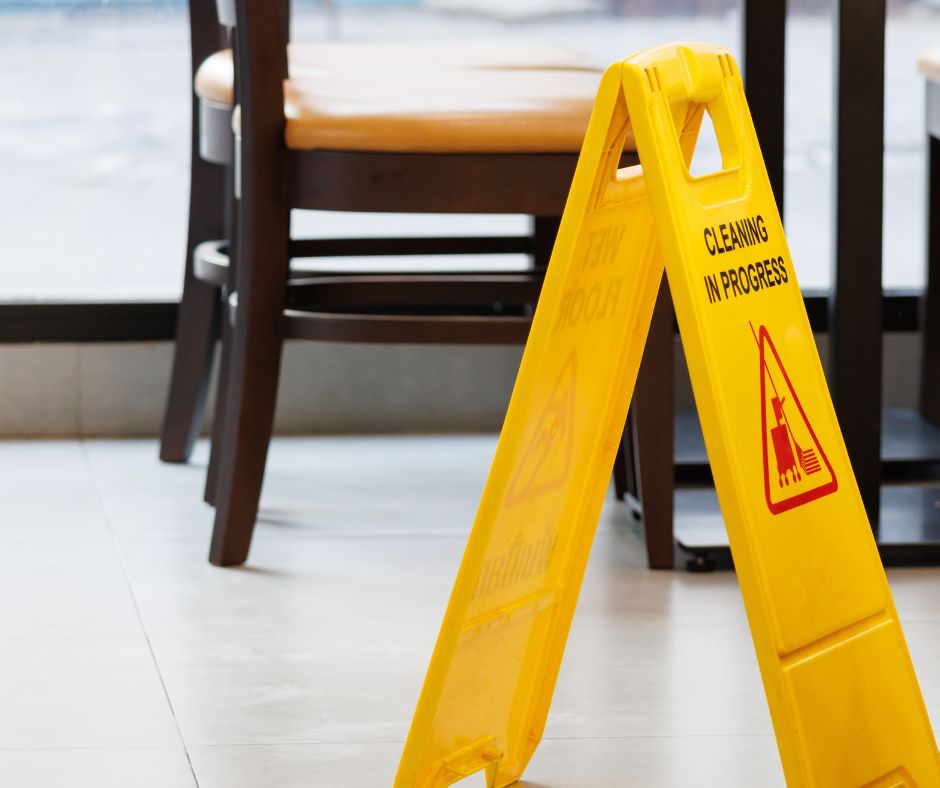
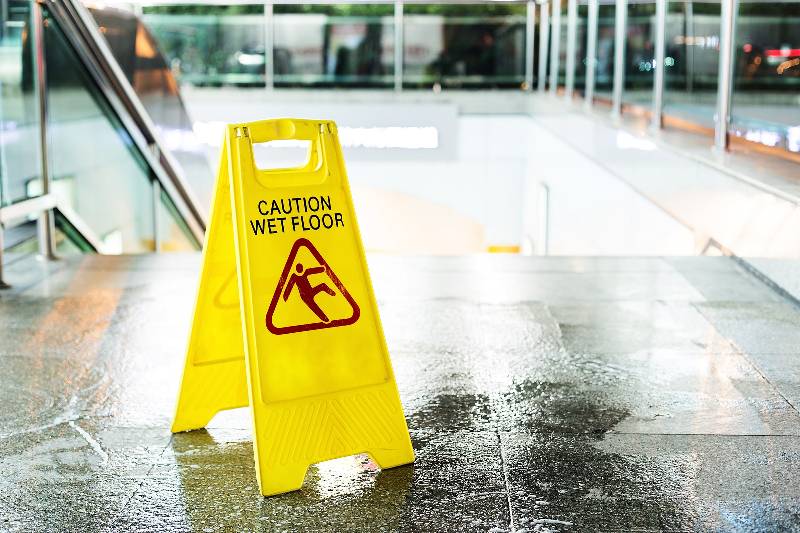
- Wet or slippery floors caused by spills, cleaning, or leaks;
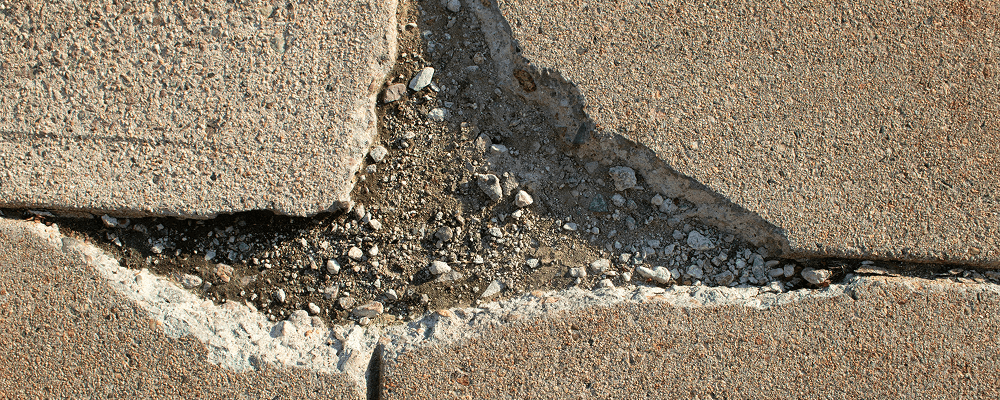
- Uneven sidewalks or walkways that create tripping hazards;
- Loose floor mats or rugs that shift underfoot;
- Broken stairs or missing handrails;
- Poor lighting that prevents people from seeing hazards;
- Cluttered walkways or debris in high-traffic areas; and
- Damaged flooring, like cracked tiles or warped boards.
These accidents often occur in places where people expect to be safe, including grocery stores, restaurants, apartment complexes, hotels, parking garages, and public sidewalks.
Who Can I Sue for Slip and Fall Injuries?
If you were hurt in a slip and fall accident, the parties legally responsible for your injuries depend on who owned, controlled, or maintained the property where the fall occurred.
Los posibles acusados pueden ser:
- Business owners or operators. Businesses that invite customers onto their property, such as stores, restaurants, or shopping centers, must keep the premises reasonably safe.
- Private property owners. Property owners have a duty to maintain areas where people walk, including entryways, sidewalks, and parking areas connected to their property.
- Landlords or property managers. In apartment complexes and rental properties, landlords or property management companies are typically responsible for maintaining common areas such as hallways, staircases, and shared walkways.
- Government entities. Cities and other public agencies are responsible for maintaining sidewalks, parks, and other public property in reasonably safe condition.
- Public facility authorities. Agencies that manage transportation hubs or other public facilities, such as bus stations, airports, or municipal buildings, may also be responsible if a dangerous condition on the property caused the fall.
Determining who may be legally responsible requires a detailed investigation of the property, maintenance records, and the circumstances surrounding the accident. A lawyer from Silva Injury Law can examine the facts and help identify the parties who may be liable for your injuries.
How Do I Prove My Case?
Slip and fall cases are a subset of negligence. In general, negligence means that someone failed to act with reasonable care and that failure caused another person to suffer harm.
To pursue a successful claim, you must establish four legal elements.
Deber de diligencia
A duty of care refers to the legal responsibility someone has to maintain safe conditions for others on their property.
The level of duty often depends on the visitor’s legal status:
- Invitee. An invitee is someone invited onto the property for business purposes, such as a customer in a store or restaurant. Property owners generally owe invitees the highest duty of care and must inspect the premises, eliminate hazards, and warn visitors of dangers that may not be obvious.
- Licensee. A licensee is someone who enters property for their own purposes but with permission, such as a social guest. Property owners must warn licensees of known dangers that may not be easily discovered.
- Trespasser. A trespasser is someone who enters property without permission. In general, property owners do not owe a duty to keep the premises safe for trespassers, but may be responsible if they intentionally cause harm.
Establishing the existence of a duty of care means proving that you were present on the property as either an invitee or a licensee.
Incumplimiento del deber
A breach occurs when someone fails to meet the duty of care they owed. Examples of a breach may include:
- Ignoring a spill that remained on the floor for an extended period,
- Failing to repair broken stairs or handrails,
- Allowing hazardous conditions to develop in walkways, and
- Not providing warnings about known dangers.
In many cases, the question becomes whether the property owner knew, or reasonably should have known, about the hazard and failed to address it.
Causalidad
Causation connects the dangerous condition to the injury. In other words, it must be shown that the hazard directly caused the fall.
Evidence used to establish causation may include:
- Surveillance footage,
- Photographs of the scene,
- Declaraciones de testigos,
- Incident reports,
- Medical documents,
- Financial statements,
- Maintenance records, and
- Expert analysis.
Establishing causation is often one of the most contested parts of a slip and fall case. Property owners and insurance companies may argue that the injury occurred elsewhere or that the fall was caused by something unrelated to the property’s condition.
Carefully gathering and analyzing available evidence helps demonstrate that the dangerous condition directly caused the accident.
Daños y perjuicios
Finally, a claim must demonstrate that the fall caused measurable losses. Slip and fall accidents can result in both financial and personal losses.
Potential damages may include:
- Medical expenses, including emergency care, surgery, therapy, and rehabilitation;
- Lost wages if injuries prevent you from working;
- Loss of future earning capacity if you cannot return to your previous job;
- Pain and suffering resulting from the physical and emotional impact of the injury;
- Loss of enjoyment of life if the injury limits daily activities or hobbies; and
- Rehabilitation and ongoing care costs.
Every case is different. The value of a claim often depends on factors such as the severity of injuries, recovery time, and how the accident affects a person’s long-term health and livelihood.

 209-583-3046











 LLAMAR A
  EMAIL
EMAIL  Pregunte a AI
  PREGUNTAS